
Abby Snyder
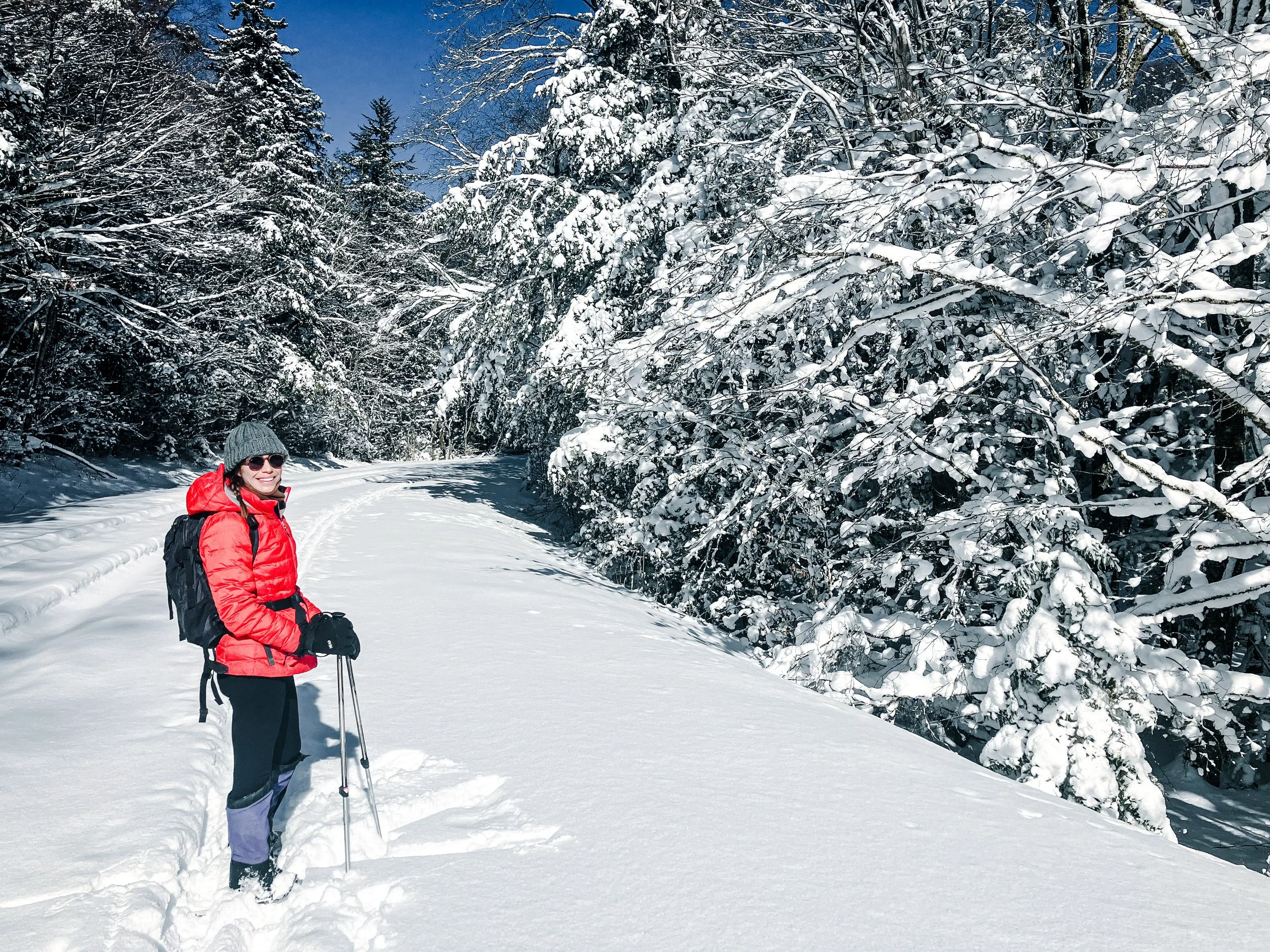
I sat down with Abby Snyder, a classmate from Dickinson College, to trace the trajectory of a career that has taken her from the mountains of Appalachia to the farms of West Africa and back again. She's an environmental badass — there's no other way to put it.
Abby doesn't just study the planet — she listens to it. As a climate activist and innovator specializing in nature-based solutions, she works at the intersection of biological systems, corporate sustainability, and the communities most impacted by this work. Her focus is agricultural supply chains — one of the most significant and often overlooked contributors to carbon emissions — where she operates at both ends: inside corporations helping them define and meet science-based carbon targets, and on the ground with farmers and ranchers implementing the projects that make those targets real. But what sets Abby apart is what she insists on centering in all of it — the people. The communities living inside these ecosystems aren't a footnote or a test ground. To Abby, they are the work.
The mechanics of corporate carbon reduction live on spreadsheets and breathe through science — and in part, they do. Leading companies set what's called a science-based target, a public commitment to reduce emissions in line with a 1.5 degrees Celsius threshold. But meeting that target requires getting into the messy, specific reality of how things are actually made. In dairy, that means addressing methane emissions from cattle. In agriculture, it means working with ranchers on cover cropping, low-till farming, and agroforestry — incorporating trees into productive working land. Every intervention is a small dial turned within a massive system. Abby's gift is knowing which dials matter, and who needs to be in the room when you turn them.
But every room has its own ecosystem — and even the most committed activists can find themselves questioning whether they belong in it. That psychological war is real. Abby wages it the same way she approaches the planet: with clarity about her individual contribution and an unshakeable sense that she's exactly where she's supposed to be.
Her work is largely scientific and agricultural, but also laced with strategy and creativity — born out of childhood experiences in the Appalachian mountains and sustained by what can only be described as a karmic love of planet and people.
Andrew Williams: Are there early moments or curiosities that shaped where you are now as a professional?
Abby Snyder: I know in my bones that — this is going to sound so hippie, but — I truly love the planet. And I love the people that interact with this planet. My orientation has always been towards the environment. As my career continues to evolve and change, I'll always be in the environmental space.
Part of it is growing up in a coal mining community. I grew up in Appalachia witnessing the impact extractive economies can have on communities and the environment. I was in an area that was impacted by mountaintop removal, which is an extreme version of coal mining. You not only see the environmental impact, but you see the economic impact on communities from that area, and you see the health impacts. There are projects that I've done related to the health impacts. I do think that was a key part of it — witnessing the disproportional impact on communities and places on this planet, and wanting to do something about it.
Then also, Ferngully — I'm not even going to lie — I loved Ferngully. I was always playing in the woods as a kid. I was the biggest tomboy, out in the woods, making up stories about the creeks and the trees. I had names for the rocks, and I was friends with the fireflies. I was barefoot and running around in the woods with three brothers. I learned to love the environment. It was my friend. When I'm away and come back and see the Appalachian Mountains, I'm seeing family again.
Andrew: Where do you see this work going — and where do you see yourself going within it?
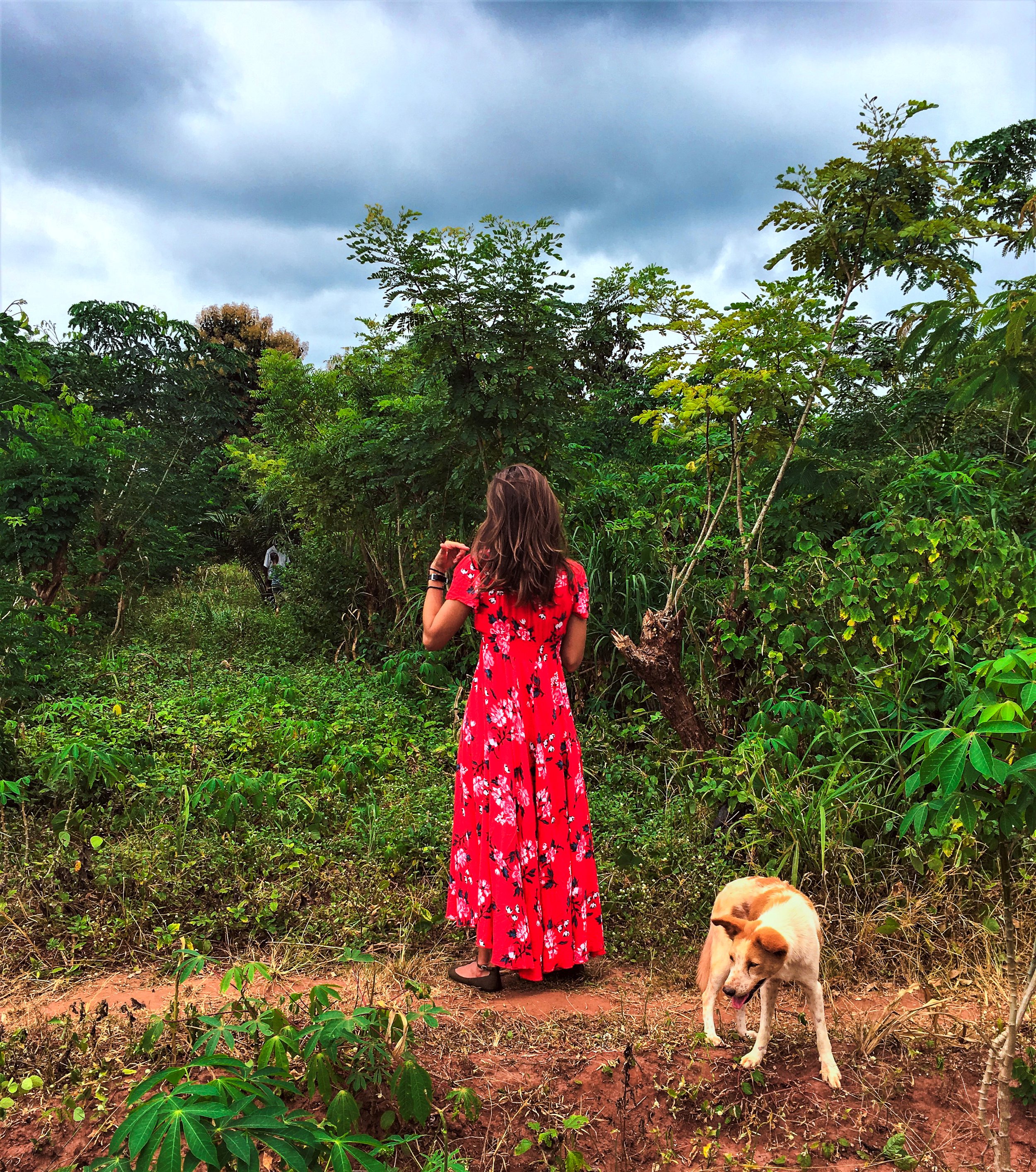
Abby: There are so many paths you can take in the environmental space. When I was 22, I was a Peace Corps volunteer working on food insecurity in Togo in West Africa with a small community for two years. I had just graduated from Dickinson, and I came in thinking, “I know how to farm — I was at the college farm, I know agriculture.” And then I got there and realized I didn't know anything. I was working directly with subsistence farmers, meaning the food that they grow is the food they have to feed their family. There's no safety net. The margin is that thin. I remember going out, spending a lot of days walking around and talking to people and hanging out with farmers. We went out to one of my close friend's farms, and we were looking at corn he was trying to grow, and he said, so poignantly, "The rains just don't come anymore." Even when I say that, I get chills, because it hit me so hard that the people who had nothing to do with climate change were being disproportionately impacted by it.
When I came back to the US, I was really oriented around what is the biggest lever that I can pull on to have an impact. That's what led me to corporate sustainability and specifically within agriculture. I felt I could try and turn some of these freight liners around, turn the dial just a little bit within my realm of influence. I saw that as a massive opportunity to create change, but it all tied back to that experience in Togo.
Andrew: What did Dickinson give you that you still carry?
Abby: Dickinson was huge for me. I came from a pretty rural community, and the quality of education really expanded my mind. The [college] farm was significant. I looked up to Jen Halpin, who still runs the Dickinson College Farm, as a mentor and someone that I aspired to be like. I can still remember the evenings on the farm, feeling really connected to this beautiful small-scale system, but also feeling really connected to her and inspired by the person that she is. She led me to the Peace Corps.
I wrote my [senior] thesis on how cattle are contributing to climate change. It was still theory back then. I remember being in the basement of the library, with all these books, really feeling like I was cracking something. There was some evidence around it, but there wasn't a ton of talk. And here I am now working in agricultural value chains and finding ways to reduce emissions associated with beef cattle.
Andrew: When you think about imagining a different future, and you talk about this being an art and a science — define for me where that art and science comes into this work.
Abby: There are certain foundational science principles that we're resting on — the physics aspect of greenhouse gas emissions accounting, greenhouse gas concentration in the atmosphere, and how that influences temperature increase. These principles also relate to the carbon cycle and how we account for that, which is a growing science. I [also] work a lot in soil science, and that's definitely an evolving space where we don't know a lot.
And then the innovative space that I've been working in: how do we begin to internalize a negative externality into a company's portfolio? How do we begin to fold carbon into a market? How do we assign a dollar amount to carbon so that it can be traded and sold, and there can be financial incentives for companies to mitigate carbon within their supply chain? That's the art, because you're standing on climate science, but you're looking at what are the drivers to begin to influence corporations to mitigate their emissions. Often that is done through looking at the bottom line and financial incentives. A lot of the really interesting work I've been involved in around carbon credits and carbon markets is figuring out how you create a fungible asset that can be monetized and traded within a market system.
Andrew: Everything you describe is clearly creative work, but being able to sit in a space where you can imagine a vision of the future, and then work towards that piece by piece — by working with corporations or farmers — that's really exciting to me. How are you holding that?
Abby: One of the things I've been working on feels like a vision for how we design. When a company has identified a hot spot and they're designing a reforestation project around that, a lot of my thinking recently has been around how we can actually begin to look at that system through the lens of not only carbon, but also cultural ecosystem services. That's an interesting new space that hasn't been brought into the full package of designing a project.
We really look at a project through a carbon-myopic lens, but because these projects are sitting within communities — I'll use the example of Togo — we've created an agroforestry system, which is where you plant trees and crops in an integrated way, and the integration of those trees is definitely enhancing that system's ability to remove carbon from the atmosphere. But those trees were selected based primarily on carbon sequestration. They weren't selected based on that community's relationship with that tree.
What I'm really interested in is, can we be more creative in the design of these systems, so that the plant species and tree species are intentionally selected to be ones that have cultural relevance and cultural significance to that community? Culture can be thought of as spiritual or religious practices, but also just utility — does the community have a relationship with this plant, does it use its tree limbs for wood fuel in a regenerative way, does it use the bark for a medicinal need in the community? Just thinking more creatively and holistically about the design of these systems — beyond carbon. Yes, we're storing carbon, but also, can we design them to enhance the cultural ecosystem services of that system?
That's what I've been working on with my new venture: The Agroforest Project. We're linking ethnobotany — the study of plants and people — with climate science. That's the vision I hold for the future.
Andrew: Do you imagine a world where climate change permeates every industry?
Abby: I think anyone on this planet has a responsibility to address climate change. Corporations are made up of people. Companies don't always care — they aren't designed to care — but they do have business goals. A lot of my framing has been that climate change is a risk: to your supply chain, your reputation, your bottom line, with future regulatory risks to consider.
My focus has been agriculture. To give an example — increased droughts or flooding can really destabilize the sourcing of raw commodities for large food and beverage companies across North America. A lot of their thinking around designing projects is to reduce and remove carbon, but also to bolster the resilience of that system so that it is less susceptible to the impacts of climate change. I think any industry could look at it through that lens and find a reason to act.
Andrew: What’s your advice for young adults aspiring to enter this space and make an impact?
Abby: Philosophically, I always knew that I wanted to work on the environment. Part of this work is identifying why you're here and your values, and ensuring that the steps you take along the path are in alignment. That's been a constant recalibration for me. A big part of finding my way through this space is asking, does this work, job or company align with my values?
If it feels uncomfortable, you're probably in the right place. That's been a good indicator that I'm on the right path — when something feels really scary and inaccessible, and I feel like I shouldn't be in the room. Every single time I've done that, it's shown me that I'm new, I'm growing, I'm learning, but I can be here.
I often took jobs early on that gave me more responsibility than I should have had. The Peace Corps was like that — you're alone, you're the only American in the village for two years, with a tremendous amount of responsibility and autonomy. You're directing, with the community, what those two years look like. I also grew really quickly by working for two smaller organizations in DC — a startup and a nonprofit — that, by default, had to give me things to do that were beyond what I thought I could do.
And then practically, what was useful in undergrad and graduate school is having a liberal arts education and a broader understanding of systems and how systems work. Because this work is inherently interdisciplinary — it's psychology, it's economics, it's science. Having a smattering of all these fields is really important, but having at least one tool when you graduate that you can hold on to — something you can say you're really good at — is equally important. For me, that was greenhouse gas accounting. That could land me a job, and then I could apply all the more holistic learning within that job.
Andrew: Do you ever suffer from imposter syndrome?
Abby: I definitely have imposter syndrome with the Agroforest Project. Everything is new. Am I doing this right? I have no idea. But I think that's how you do it. You just have to start walking down the path, and then the path starts to reveal itself.
Andrew: You recently relocated back to West Virginia. What inspired that? And do you feel people being closer to nature, more attuned to nature, makes them more creative?
Abby: A large reason I moved back is because these mountains really do feel like family. I really love this ecosystem. I feel familiar and comfortable here. The last four years I was nomadic and traveling all over, and that was incredible — I learned so much. But it hit a point where my partner and I both agreed that when it didn't feel like a net positive anymore, we would stop. Traveling is great, but it just hit a point where we were tired. That's when we decided to find a home base. It was a little bit of choice paralysis, because we were both remote and could be anywhere in the world. This place truly just revealed itself. It felt so intuitive. An absolute yes. Part of that is it's a perfect Venn diagram of things that we wanted. An ecosystem that I'm absolutely in love with, a really vibrant arts community in Lewisburg, and then nature.
Yes, I think being in nature is essential. I can't say that for everyone, because some people get really stimulated by cities, but for me and my partner, who is also creative, it's really important for us to hear ourselves. Hearing myself — my intuition, you could say — is essential not only for innovating and problem solving, but also for allowing myself to grow and evolve through this work, and to listen to when I need to jump on that next rung. It's only through the solitude of nature that I can tap into that inner voice and hear myself.
Follow Abby on Instagram @theagroforestproject and connect with her on LinkedIn.